










Welcome To Tor-Rogers

If you thought that Rogers Sportsnet already did the country a disservice by being very Toronto-centric in its broadcasting, be prepared for more because Rogers Communications agreed to buy out Kilmer Sports Incorporated today from its 25% ownership stake in Maple Leaf Sports and Entertainment for $4.35 billion, making Rogers the sole owner of the NHL's Toronto Maple Leafs, the AHL's Toronto Marlies, the MLB's Toronto Blue Jays, the NBA's Toronto Raptors, and the CFL's Toronto Argonauts. Outside of the soccer, the Sceptres and the Tempo, Rogers owns every professional sports team in Toronto.
Beginning in September, Rogers will have spent nearly $23 billion on sports properties in just over one calendar year if one takes into account the new 12-year, $11-billion agreement for the national NHL rights, and you have to think that most of, if not all of, the Toronto Maple Leafs' schedule will be airing exclusively on Rogers Sportsnet where they can make all the ad revenue they can to help pay off this latest investment. Apparently, money is no object on Bloor Street.
At some point, the CRTC has to step in and start breaking up this telecommunications monopoly that Rogers is creating around their sports franchises. We already know that they forced CBC out of professional hockey with the costs to sublicense games. Rogers doesn't provide a French option for the Quebec region despite the fact that the Canadiens likely won't have French regional broadcasts next season. The costs of its subscription-only, premium service which gets viewers access to every NHL game next season sits at $325 annually while the basic package - four regional channels with blackouts outside your region - is $250 annually. Adding Sportsnet to a cable package starts at $15 per month. Is that even worth it?
I should asterisk the above worries by saying that Rogers Sportsnet hasn't announced any sort of schedule yet, so there's no guarantee that Sportsnet will have 84 Maple Leafs games on this season despite how real that seems. What should worry everyone, though, is that the costs of watching Sportsnet are real no matter what sport you want to watch, and that's where the CRTC needs to find some courage and tell Rogers that their telecommunications oligarchy that their prices are insanely too high and that Toronto professional sports cannot be monopolized on Rogers' television networks.
They already lost me as a viewer when the CBC announcement was made as I stand firmly by the public broadcaster's 74-year effort in turning hockey into Canada's sport. I still have ways of watching without paying, but the cost alone is a major barrier. What would be incredible is if Canadians simply stopped subscribing altogether, forcing Rogers in major losses where they have to take drastic measures. Of course, that would like mean Rogers shuttering radio and television stations to cut costs, but maybe that's the route we, as Canadians, have to take to make hockey affordable again.
The Toronto Maple Leafs are not just for the richest of the rich. Last season, Maple Leaf Sports and Entertainment raised ticket prices "by more than 20 percent in some sections". The purple section at the very top of Scotiabank where the "nosebleed" tickets are situated went from "went from $8,522... to $10,396" in 2025=26 for two season ticket packages. Season tickets in some of the gold sections in the lower bowl were raised "more than $2,000 to $28,240 for a pair of tickets, or $344 per ticket per game," while "[p]layoff tickets in those seats are priced at $36,152, with Rounds 1 through 4 going from $5,184 for four games to $6,224, $9,886, and $14,848".
I get that Toronto is the largest Canadian market and that, by population alone, they have more affluent fans who can afford these prices. Everyone will tell you that ticket prices are based on a supply-and-demand market, but there's a strong correlation between Rogers paying $23 billion to own most of Toronto's professional sports teams and the NHL rights in Canada to their ticket pricing being higher than everywhere else in Canada and still rising. Yes, there's a waiting list for season tickets in Toronto so demand is high, but how many people have $28,000 of disposable income for hockey tickets right now?
"It is sad that the game has become so corporate and no longer can real fans afford to go every game," Danny Russell, a a retired teacher and longtime season ticket holder in Scotiabank Arena's golds section, told James Mirtle of The Athletic. "No longer do you just 'give' your tickets to someone and say, 'Take your kid to a game.' Doubly sad."
That's the reality in today's NHL: it's no longer a night out for a family nor a bonding event between parents and kids. The NHL and its teams have made fan engagement into an investment that shuts out a lot of fans from which they can take part. The burden of this investment is that it always requires more and more money whether watching from a seat in the arena, watching at home on the television, or simply buying a piece of merchandise like a jersey to support the team.
With so few television options in Canada, Rogers has essentially cornered the market for hockey broadcasts. They have sublicensed Monday night games to Amazon for the Prime streaming service, and there are a handful of regional broadcasts for some teams on TSN networks. None of these are free, though, so one needs to subscribe to three different broadcasters in order to watch all 84 games.
If Rogers was to do the greediest thing and put all 84 games on Sportsnet Ontario with a handful of them being shown nationally, Maple Leafs fans from other regions would need to subscribe to Sportsnet's full package where all five Sportsnet stations are available. That doesn't mean there won't be blackouts, so it's back to the Sportsnet+ streaming service for fans outside the Toronto region.
Imagine paying $325 in Saskatchewan to watch the Leafs on TV! How many kids can plop themselves down on Saturday night and watch their favorite team if they can't find them on TV?
What Danny Russell said to James Mirtle about hockey being "so corporate" has never been truer today with Rogers' takeover of Maple Leaf Sports and Entertainment. Expect prices to continue to rise, expect the average middle-class fan to stop attending games, and expect the NHL to start asking more questions and sounding the alarms about attendances in smaller markets. The economics of the league no longer make sound financial sense to most middle-class fans, but even moreso in Toronto where season ticket prices could easily eclipse $700 per ticket per game in the lower bowl.
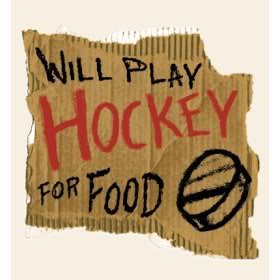
No one told me that I had to make an NHL salary to be a fan, but that's what it's going to take if one wants to cheer on one's favorite team from inside an NHL arena while wearing that team's jersey while eating a hot dog with a beverage after parking outside. They can deny it all they want, but Rogers Communications is a major part of why hockey is failing in this country: it's too damned expensive.
Until next time, keep your sticks on the ice!


 Posts
Posts


No comments:
Post a Comment