





Monday, 12 August 2013

What Happens Over Two Years?

If you've been keeping tabs on hockey in Canada, you probably heard that Canada has won the Ivan Hlinka Tournament for the sixth-straight time. This group of under-18 boys played some inspired hockey in beating the USA by a 4-0 score in the final, but there were a few bumps along the way that they dealt with and learned from on their way to a gold medal. Today, though, I need to ask a serious question that has crept up in my mind over the last couple of days after learning of Canada's win. It's not going to be answered easily because there are many variables that factor into the "why" answer, but the question needs to be asked regardless because the results are hard not to notice.

Why is it that Canada has won six gold medals at the under-18 tournament, yet hasn't brought home an under-20 gold medal since 2009? Why is it that we dominate up to the age of 18 based on recent gold medal counts, but then the world seems to catch up to our developing players over the next two years?

I'd like to say that the expectation of a gold medal year in and year out for the U-20 men is a little ludicrous, but the vast majority of Canadians seem to expect nothing less. There is immense pressure on these lads to bring home a medal annually despite the talent assembled by the rest of the world. While I appreciate a gold medal, sometimes the better team on the night of the game wins the medal. That's why we play the games! But for some reason, recent history is showing us that the rest of the world is catching us quickly when it comes to the U-20 tournament when Canada had rolled over the competition when all players were younger than 18 years of age.

If there is one reason that would stand out more than any, the answer would be personnel. There is turnover for any junior-aged team as players mature faster than others at different rates, and their games also evolve at different paces. However, when picking the best whether is be age 17 or age 19, there should be a few players who play for both teams.

If we look at the 2009 Ivan Hlinka U-18 Canadian team in comparison to the 2011 Canadian World Junior Championship team, there are certainly a few names that appear on both rosters. Defenceman Erik Gudbranson, and forwards Jaden Schwartz, Sean Couturier, and Quinton Howden are the only holdovers from the Ivan Hlinka gold medal-winning team that played for Canada in 2011 at the World Junior Championships. While both Jeff Skinner and Tyler Seguin were playing in the NHL, there were sixteen other players who didn't make the cut for Canada in 2011 when they had in 2009. Continuity and chemistry is something cannot be manufactured in a short tournament, so having players who know one another while playing together would be a sensible approach to developing a strong junior-aged team for international competitions.

The strategy of developing chemistry has worked for Canada on other levels. Duncan Keith and Brent Seabrook are seemingly paired together everywhere they play, and the results for both the Blackhawks and Team Canada have been positive thus far. Because these two have great chemistry together, it would make sense to keep these two men playing together in high-pressure situations because they already have an understanding of what the other can and will do.

The players who play at the Ivan Hlinka tournament for the various countries come from all over the place in their respected countries, but that's the setup for every single country so the disadvantage is nil when it comes to this chemistry factor. There isn't a massive development program for kids aged 17-and-under anywhere that I have seen, so everyone is starting at the same point in terms of building chemistry. That's when individual talent will take over because, as the saying goes, the cream rises to the top.

However, when we look at the development of players in Canada at the CHL level, there is that disjointed process of distributing players across the country via the various amateur drafts held by the WHL, OHL, and QMJHL. While players certainly develop at a high level, there may be some who fall off the map when it comes to being drafted by a junior team that is void of serious talent. This may be the reason for the USA's massive improvement over recent years because they have a team that plays junior hockey together in the USHL all season long thanks to the work being done by USA Hockey with the National Development Team Program.

While the American squad has only one gold, eight silver, and two bronze medals in the 22-year history of the tournament - including a mere two silvers since 2009 - there is something to be said for the elite American players who have played together on both the U-17 and U-18 teams for the NDTP as they have shown significant growth when it comes to the American entries at the U-20 World Junior Championships. Since 2009, they have captured two gold medals and a bronze medal while Canada has just two silvers and a bronze medal in that same period.

So it must be asked: is a Canadian National Development Program the answer? Well, it depends on who you ask.

According to a Toronto Sun article written by Chris Stevenson in 2012, there are those who view a national program as a benefit while others see it as a detriment to a player's development.
"I've heard it before. The criticism we get is the offensive creativity is stifled by a system," said Scott Monaghan, the National Team Development Program's director of operations. "Nobody lives strictly by a system. Our coaches go out of their way to let them have some creativity. It's probably stifled a little bit if anything by the challenge of playing against older players. It's harder to get the puck back. You can't stickhandle through everybody's legs three times.

"One of things we talk to a kid about coming here is the games are only a piece of it. The real challenge for you is you're going to practise with the best kids in your age group every day. You're going to have to beat the best defenceman or stop the best forwards. For us, that was a huge piece of the puzzle and why we wanted to have this."
Clearly, USA Hockey sees their program as a benefit to a player's development from Mr. Monaghan's comments. Pitting the best kids in American hockey against one another on a daily basis allows them to grow and develop at a much faster rate, according to Mr. Monaghan, and this would theoretically make up the gap between Canadian and American kids when it comes to that two-year stretch.

There is another party, however, who feels that the US NDTP is actually hurting American kids when it comes to their development.
One down side is, because of the quality of the players, some scouts think the players don't benefit from being a star on a team, playing a lot of minutes in all situations. They are just another cog in the system.
I'm not sure who these scouts are, but I'm pretty sure they haven't been watching much hockey in recent years. While the number of Canadian kids drafted remains high in every draft year, we can certainly see a trend where more American-born players are taken higher and higher in NHL Entry Drafts.

Perhaps this was no more evident than in recent years. The US NDTP has produced ten first-round picks since 2009 - with half coming in 2010 - including Kyle Palmieri, Jack Campbell, Derek Forbort, Jarred Tinordi, JT Miller, Connor Murphy, Tyler Biggs, Jacob Trouba, Brady Skjei, and Stefan Matteau. While the claim that these players are not stars on their own team may be true, the fact that they come in with more well-rounded skills may make the more valuable in the long run. In 2010, 15 players from the U-18 US NDTP were selected, proving that GMs see value in these players. As for star power, both Patrick Kane and Phil Kessel played on the NDTP, and they are certainly seen as stars in the NHL at least by fans in the cities they represent.

Clearly, the centralized developmental program implemented by the USA in 1996 is bearing fruit, but it appeared to be an uphill battle back when this model started. "We looked at the international way of doing things, the Canadian way of doing things, and really none of them fit exactly because our development model was spread out among a number of different entities," former head coach Jeff Jackson told NHL.com. "One problem was some kids were playing too many games and not practicing enough, and others weren't playing enough game and practicing too much. It was finding the middle ground and putting them in an environment to develop them physically, develop them emotionally and make sure we didn't lose anything academically."

2010 may have been the banner year for the US NDTP outside of their impressive list of players drafted. US Hockey saw gold medals from the World Under-17 Hockey Challenge, the World Junior Championship, and the World Under-18 Championship, and a number of alumni from the NDTP won a silver medal in Vancouver at the Olympics. As shown here and above, there are clear benefits to having a centralized program that brings the best players together from across the country to compete as a team for extended periods of time.

The problem I see in switching this model to Canada is that the junior teams that make up the CHL would probably have an aneurysm in losing the best players for a four-month period to participate in a national development program. There's just no way you can pull a Nathan MacKinnon and a Jonathan Drouin from the Halifax Mooseheads for four months. The Mooseheads, as well as the rest of the QMJHL, would cry "bloody murder" in terms of their lost box office traffic because the two most dynamic players in the league aren't playing. The Canadian Hockey League is as much a business as it is a development league, and there would be serious issues between Hockey Canada and the CHL if the players were used for more than the three weeks for which they're already needed over Christmas.

So how does Canada seemingly reclaim that dominance seen at the U-18 Ivan Hlinka Tournament? I'm not sure there's an easy answer. What works for US Hockey most likely wouldn't work for Hockey Canada. And, to be honest, while there have been major strides made by Sweden, Finland, Russia, and the USA to close the gap that existed between Canada and those countries, the improved hockey seen by all countries shouldn't really worry Canadians. We'll still be on the podium at most tournaments, but there will be blips on the radar when it comes to others. The only thing that should worry Canadians about the game of hockey is whether we're plateauing or not.

If we have plateaued, it might be time to head back to the drawing board and find a better way.

Until next time, keep your sticks on the ice!

Sunday, 11 August 2013

Wayne, Guy, and... Bubbles?

There are a lot of things that Canadians hold dear to their hearts when it comes to protecting our identity. We're proud of our love of Tim Hortons, we still talk about Bob and Doug McKenzie, and there's always an approving nod when it comes to beer drinking. Hockey, of course, is considered as Canadian as maple syrup, and we all secretly laugh at the Trailer Park Boys. You can't get much more stereotypical than hockey and the Trailer Park Boys, and it seems that people everywhere know these two things as being Canadian, so what happens when you put Canada's love of hockey and the Trailer Park Boys together? You get an incredible interview with Bubbles for Hockey Night In Canada!

Hockey Night In Canada interviewed Mike Smith as his famous character "Bubbles" for their Game Day segment, and it's pretty funny. Because this was on CBC, there is no cursing in it, but Bubbles comes across as a pretty knowledgeable hockey guy. From him being compared to Wayne Gretzky in his minor-hockey days to him alluding to his father possibly being Dave "The Hammer" Schultz to him coaching Sidney Crosby in Crosby's minor-hockey days, Bubbles takes us on a funny trip through his hockey memories. Here's the video, and it's a beauty!
An NHL team in Halifax? There have been Nova Scotia-based teams before, but they may find some serious competition from the QMJHL's Halifax Mooseheads! In any case, Bubbles gave a pretty good interview for Hockey Night In Canada!

So you may be asking why I'm bringing the Trailer Park Boys up? There's good news if you're a fan of the Boys because they are shooting the series again! That means we'll get to see them play street hockey in the trailer park again as well as committing petty crimes as they aim for "Freedom 35". You can head over to their site right now, but I do warn you that the language used on the site and in the videos isn't very PG. It's more R-rated, so please parent accordingly when it comes to children viewing that site.

Hockey season is getting close, and we'll soon have another season of Trailer Park Boys. Could the Canadian TV landscape get any better?

Until next time, keep your sticks on the ice!

Saturday, 10 August 2013

NHL Animal Week - Anaheim

The NHL has a few teams with logos that feature animals, so it became apparent that with Shark Week on Discovery Channel that I should feature an NHL Animal Week where some real biology can be discussed! There are seven teams that distinctively could be featured, and we've taken a look at the animals in the logos of the San Jose Sharks, Florida Panthers, Boston Bruins, Pittsburgh Penguins, and Phoenix Coyotes in the previous days. Today, we focus on a waterfowl species in the NHL as we take flight with the Anaheim Ducks on HBIC's NHL Animal Week!

Saturday - Anaheim Ducks

Since there are no ducks that I can find that combine the colors of black, champagne, and orange, I'm just going to make this a generic article about ducks. Ironically, it will be similar to the generic workmark used by the Ducks across their chest. In any case, all ducks belong to Family Anatidae which includes swans and geese. That covers a lot of waterfowl, but there are many different evolutionary paths leading to the number of ducks species seen today, so ducks are classified as a form taxon - a group of species that share a similar overall form. Science is working to change this form taxonomy since it allows for great variations within taxa without proper scientific investigation or explanation. However, for simplicity's sake, we'll stick with the form taxon in this article thanks to the generic Anaheim Ducks logo.

But rather than me droning on in written word, I decided to go out and find someone who actually accomplished something when it comes to ducks. Thanks to YouTube, I discovered a "duckumentary" by Monelle Britt that earned her a $35,000 scholarship into Full Sail University! So without further adieu, here is Monelle and her documentary A Day in the Life of a Duck.
I have to say that Monelle did a pretty solid job! With the vast number of duck species out there, it would be hard to speak about anything concrete since some species differ greatly. Monelle did a fantastic job in just over four minutes in talking about ducks while providing great visuals.

Since the numbers on HBIC have plummeted since the summer started, I'm clearly not keeping readers interested. Tomorrow, I'm going to regroup. I'll post a funny video, and I have a plan to write a serious look at a hockey topic for Monday. You'll probably want to read that, especially if you're a fan of international hockey. To those who stop by frequently, thank you. Please tell your friends, families, co-workers, teammates, and anyone else that HBIC is looking for their readership because I want to know what you, readers, want to see on this site. Comment below, send emails, tweet me - anything that I can bring to you in terms of information is something I'll investigate!

Until next time, keep your sticks on the ice!

Friday, 9 August 2013

NHL Animal Week - Phoenix

The NHL has a few teams with logos that feature animals, so it became apparent that with Shark Week on Discovery Channel that I should feature an NHL Animal Week where some real biology can be discussed! There are seven teams that distinctively could be featured, and we've taken a look at the animals in the logos of the San Jose Sharks, Florida Panthers, Boston Bruins, and Pittsburgh Penguins in the previous days. Today, we focus on the canine species in the NHL as the Phoenix Coyotes take center stage on HBIC's NHL Animal Week!

Friday - Phoenix Coyotes

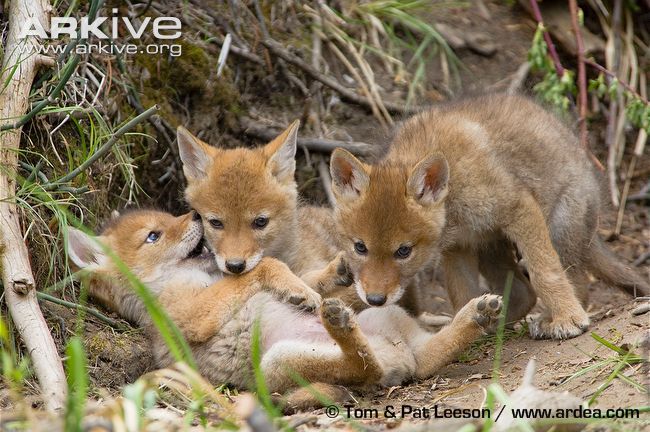
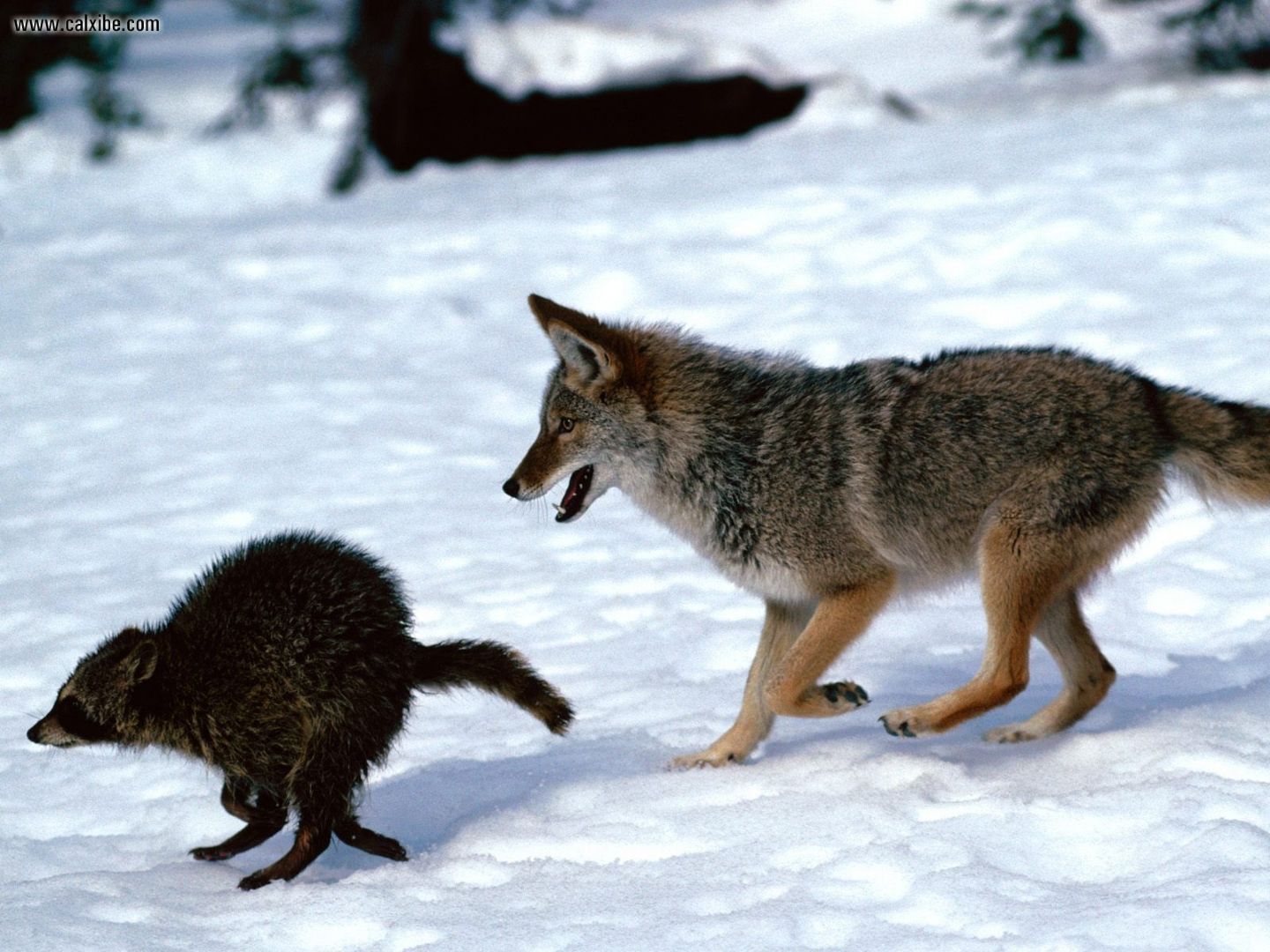
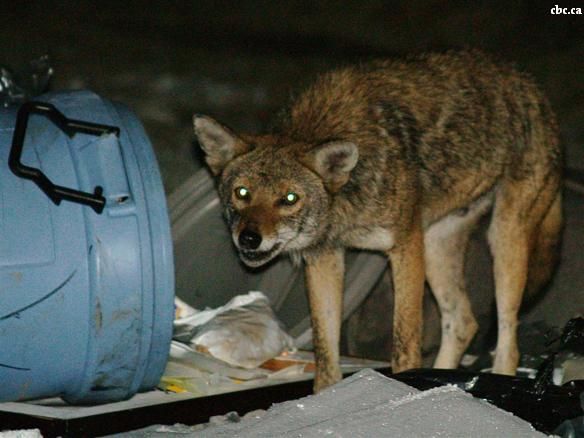
The coyote, Canis latrans, is a hearty canine species, spanning the North American continent from Alaska through to Panama. The only places they really don't range into is the extreme north in both Canada and Alaska. They were once the primary canine species on the prairies and in the desert, but their range has been changed due to loss of habitat and prey. They can still be found in these ecosystems, but their numbers are less in those ecosystems than before. However, the coyote has also shown an adaptability to move into and thrive around areas populated by man, and have been seen in cities across the continent at night. Needless to say, the coyote is a savvy and adaptable animal, and estimates put their populations at an all-time high thanks to their city living.

Coyotes commonly weight between 20 and 50 pounds, and stand approximately three-feet tall when fully grown. Fur colors will range between gray to a yellowish-brown hue. Their tails make up half of their body length, and are identifiable due to their bottle shape and distinctive black tip. The fur on the backs of the coyotes are black-tipped as well, giving a darker stripe along the spine and across the shoulders. They have large ears that stand straight up from the skull and taper into a point, and are extremely large in relation to their head. The size of the coyote is much smaller than that of wolves, but they are significantly larger than foxes.

Courtship in coyotes last for approximately 60 to 90 days. Mating occurs as the spring season arrives in North America, commonly occurring between January and March. Mates are kept for a number of years, but monogamy should be inferred as males hunt in a territory that can extend up to 20 square kilometers away from their dens. This could include several females, but males will normally choose one mate per year due to the reproductive cycle of the female coyote. Gestation is approximately two months, and a litter of five to eight pups is common. Mothers will nurse the young for approximately one month until they are ready to emerge from the den. Both the male and female will bring food to the den to assist in feeding as well.

While coyotes can dig their own dens, they normally steal dens from animals they have killed. Favorite den-digging prey include both badgers and woodchucks, and the coyotes usually enlarges it as needed once they have occupied their new homes. Surprisingly, coyotes and badgers are often seen working together to hunt smaller rodents in burrows. Because coyotes don't dig well, they allow the badgers to unearth the rodent dens. Once unearthed, both the badger and coyote take their fill of rodent for dinner and part ways. Dens occupied by coyotes are used year after year, and all coyotes are quite protective of their dens. There are normally several entrances/exits to a den which makes capturing coyotes in urban and suburban areas difficult due to their many escape routes.

Hunting is normally done in pairs or alone, and all hunts follow similar trails to food sources. Packs are rarely seen in the wild, although they can be found when hunting larger animals. Coyotes are actually seen as a beneficial animal by most farmers as they hunt rodents, rabbits, raccoons, fish, frogs, and even deer, but are quite comfortable with meals of insects, snakes, fruit, and grass. They may also scavenge off of kills made by other animals, showing their adaptability across their environments. They are poor climbers, making their presence in mountainous and hilly environments less, but they show an excellent ability to swim and will swim across tributaries if prey movement is spotted on the opposite shoreline. Coyotes do not possess sharp vision, but do have excellent olfactory senses like other canine species, and can reach top speeds of 40mph or 65kph when hunting prey. They can also jump up to heights of four meters, allowing them occasionally take low-hanging bird nests as food as well.

There are different methods of hunting employed by the coyote. When "mousing" - hunting rodents - they slowly stalk through the grass and sniff out the rodent. Once identified for the kill, the coyote stiffens its body with all four legs held together, and it pounces on the prey much like one would imagine a cat doing. When hunting deer, teamwork is needed to bring down the larger prey. Usually two or three coyotes take turns nipping at the deer until it falters when the kill is actually made. Alternatively, the younger coyotes have been seen driving the deer towards a dominant, larger coyote who will emerge from its hidden location and make the kill on the startled deer. These learned behaviors have aided the coyote in its success as a species.

Predators of the coyote are few, but they do pose a major problem for families of coyotes. Mountain lions and wolves are extremely adept at hunting coyotes, but prefer the ease of attacking a den with young. Because coyotes do not live in packs, this allows the lions and wolves an easier time in their hunts as they normally only have to kill one adult coyote before having access to the cubs. Man poses a problem simply due to his proximity with coyotes. Because coyotes live in cities, cross-breeding with domestic dogs is seen, and the killing of house pets, rodents, and rabbits is quite common. Being omnivorous, coyotes also raid garbage cans and will engage in encounters with raccoons. All of this has given the coyote a reputation of being a pest in city environments rather than being seen as a benefit in helping rid neighborhoods of potential pests. While some relocations of coyotes to areas outside of cities has been successful, most cities simply choose to exterminate caught coyotes due to them being too naturalized in a city environment. Coyotes also can be hosts for a number of diseases, including rabies. Farmers will consider them a threat to poultry, livestock, and crops if affected.

Coyotes have an amazing communication system amongst their populations that use auditory, olfactory, and tactile signals. They are the most vocal of all North American mammals as they use three distinctive sounds: a squeak, a distress call, and a howl. These are used to communicate with other coyote individuals, and howls are usually used to announce territorial ranges or to greet when pack members re-unite. Visual acuity is low, but they will use vision to spot movement. With their large ears, they have excellent hearing, and, like all dogs, they have an excellent sense of smell - both important senses to have while hunting at night. Like all canine species, they also mark their territories very well using urine and feces. When coyotes meet, they often smell each other out and rub against one another in order to remember the scent of the new meeting.

Because of their vast numbers and city-dwelling populations, there is no known number of coyotes. It is thought that they may number into the millions across North America, but they are not considered threatened in any way thanks to their adaptability.

There's some information on the coyote. While it appeared that the NHL's Coyotes may not survive into another winter, they were saved once again in Phoenix with the hopes that they may thrive like their representative animal does. Time will only tell, but they will play in the Arizona heat for at least another five years, proving that this team, like the animal, seems to have the ability to adapt to their environment. Tomorrow, we'll move a little further west and check out the waterfowl in Anaheim as we feature ducks on the next entry in NHL Animal Week!

Until next time, keep your sticks on the ice!

Thursday, 8 August 2013

The Hockey Show - Episode Forty-Eight

The Hockey Show is thoroughly excited to have Jared Keeso on the show tonight as we prepare for tomorrow's opening night for the movie Elysium! Jared plays the role of Rico, and stars alongside Hollywood heavyweights such as Matt Damon, Jodie Foster, Shalto Copley, Alice Braga, and William Fichtner in this new film from District 9 director Neill Blomkamp! We'll be talking with Jared about the new movie, his upcoming work on other projects, the Calgary Flames, the Heritage Classic in Vancouver, and a pile of other topics!

We'll be featuring another opportunity to win a free night at the movies compliments of The Hockey Show, so make sure you tune in and listen. In the meantime, here is the official trailer for Elysium to get you into the mood for a cinematic experience!

Looks pretty fantastic, right? I am psyched to see this movie, and I'll probably wandering down to a movie theatre this weekend to enjoy this sci-fi film. We'll get Jared's take on how his beloved Calgary Flames will do, his thoughts on Miikka Kiprusoff staying quiet over the summer, the Heritage Classic coming to Vancouver as the Canucks host the Ottawa Senators, and we'll look at some other hockey news with Jared!

Tune in tonight at 5:30pm CT on 101.5 UMFM as we chat with movie star and hockey lover Jared Keeso!

Until next time, keep your sticks on the ice!